
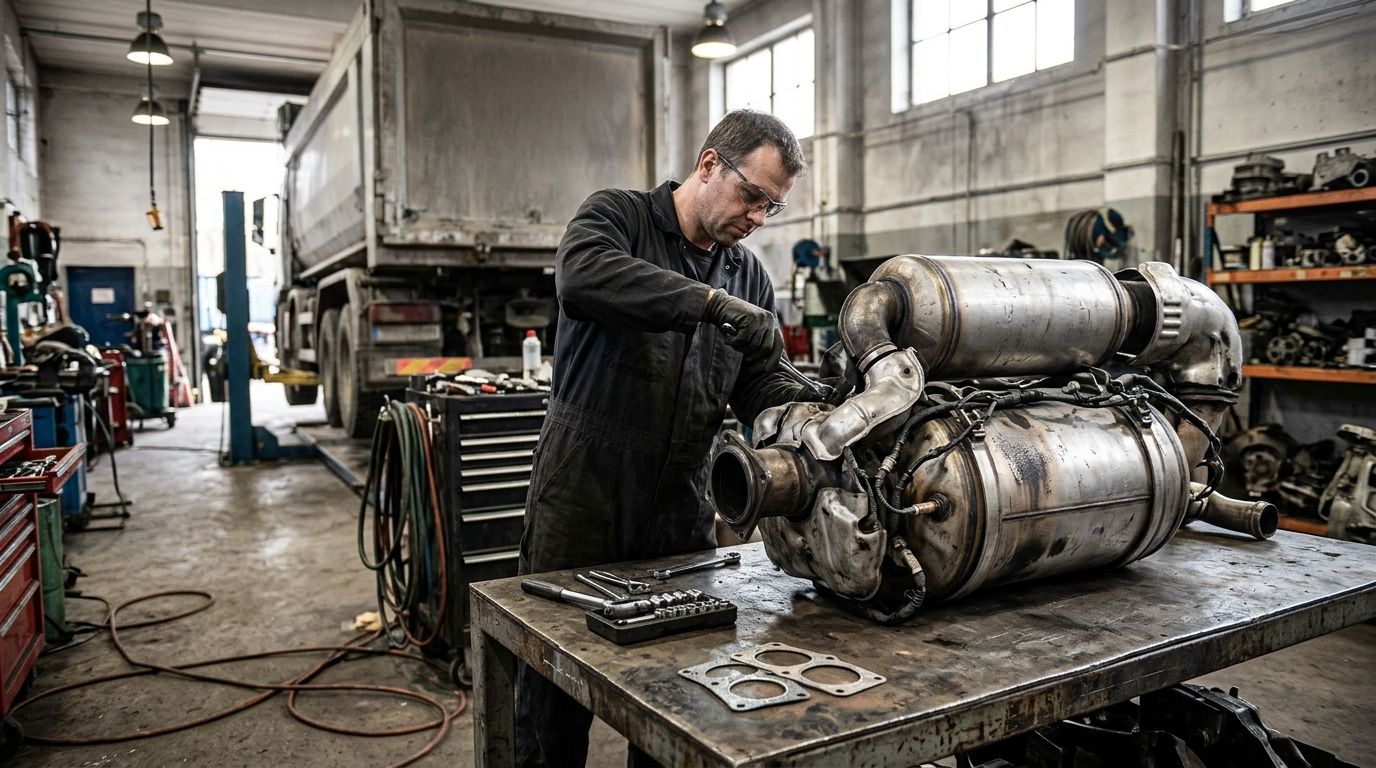
Modern trucks use advanced emissions systems to reduce harmful exhaust gases and particles. These systems work under high heat, pressure, and changing driving conditions. Regular care helps keep them working as intended. It can also reduce warning lights, poor engine performance, and unexpected downtime.
A truck’s emissions system needs more than occasional attention. Daily checks can help drivers spot early signs of trouble. Good driving habits, clean fluids, and planned servicing also matter. When faults appear, timely After-Treatment Repairs can prevent small issues from becoming larger problems.
Understanding the Truck After-Treatment System
A diesel after-treatment system treats exhaust gases before they leave the tailpipe. It uses several parts to reduce harmful emissions. Each part has a separate role, but they must work together.
The main parts often include:
- Diesel Oxidation Catalyst (DOC): This part helps reduce carbon monoxide and hydrocarbons in the exhaust.
- Diesel Particulate Filter (DPF): It traps soot and other solid particles from diesel exhaust.
- Selective Catalytic Reduction (SCR): This system uses diesel exhaust fluid to help reduce nitrogen oxide emissions.
- Sensors: These monitor temperature, pressure, and other operating conditions.
- DEF dosing system: It supplies the correct amount of diesel exhaust fluid to the exhaust stream.
A fault in one part can affect the rest of the system. For example, a blocked DPF may increase exhaust back pressure. A faulty sensor may also send incorrect readings to the engine control module.
Understanding these parts helps drivers recognise warning signs and follow the correct maintenance steps.
Why Daily After-Treatment Care Matters
A truck’s emissions system faces demanding conditions during normal operation. Long journeys, heavy loads, frequent stops, and extended idling can affect its performance.
Soot builds up inside the DPF as the engine runs. The filter must remove this soot through a process called regeneration. If regeneration does not happen correctly, the filter may become restricted.
Poor DEF quality can also affect the SCR system. Damaged wiring, leaking exhaust joints, and faulty sensors can cause further problems.
Daily care helps drivers notice these issues before they cause major disruption. It also supports better engine performance and helps the truck meet emissions requirements.
Daily Checks That Help Keep the System Clean
Drivers do not need specialist tools for every daily check. A short inspection before starting work can reveal visible problems.
Check the Dashboard Warning Lights
Look at the dashboard before driving. Pay attention to warning lights linked to the engine, DPF, SCR, and DEF systems.
Never ignore a warning because the truck still seems to run normally. Some faults allow the vehicle to keep moving while the problem gets worse.
Check the vehicle handbook to understand each warning. Different truck models may use different symbols and warning levels. Follow the instructions for the exact vehicle.
Inspect the Exhaust System
Look around the visible exhaust pipes and joints. Check for loose parts, cracks, damage, or signs of leaks.
Exhaust leaks can affect system readings and allow hot gases to escape in unsafe places. Listen for unusual sounds while the engine runs. Report changes such as hissing, rattling, or excessive exhaust noise.
Do not touch exhaust parts when they are hot. Some components reach very high temperatures during normal use and regeneration.
Check Diesel Exhaust Fluid Levels
DEF is essential for many modern diesel SCR systems. The fluid helps reduce nitrogen oxide emissions.
Check the DEF level through the dashboard or the vehicle's approved method. Refill it when needed, using fluid that meets the required specification.
Keep dirt, fuel, oil, and other substances away from the DEF tank. Contamination can damage dosing components and affect emissions control.
Look for Damaged Wires and Connectors
Sensors and control units rely on electrical connections. Loose plugs, worn wires, and damaged insulation can cause false readings or system faults.
Look for visible damage during routine checks. Do not pull wires or disconnect sensors without a proper reason. Report damaged parts so a trained technician can inspect them.
Understand DPF Regeneration
DPF regeneration is a normal part of diesel emissions control. It burns collected soot inside the filter. This process helps the filter continue to pass exhaust gases.
There are different forms of regeneration. The method depends on the truck, engine, and operating conditions.
Passive Regeneration
Passive regeneration takes place when exhaust temperatures become high enough during normal driving. It often happens during steady journeys under suitable engine loads.
Drivers may not notice when this process occurs. The system manages it without a separate action from the driver.
Active Regeneration
Active regeneration happens when the system needs extra heat to burn collected soot. The engine control system adjusts operating conditions to raise exhaust temperature.
A dashboard light may appear during this process. Drivers should follow the instructions in the vehicle handbook. They should not interrupt regeneration unless safety or road conditions require it.
Parked Regeneration
Some trucks require a parked regeneration when the filter needs cleaning and normal driving cannot complete the process.
The driver must follow the manufacturer's instructions. The vehicle usually needs to be parked in a safe, suitable area. Keep the exhaust away from dry grass, fuel, rubbish, and other materials that may catch fire.
Never perform a parked regeneration in an enclosed space. Exhaust heat and gases can create serious hazards.
Warning Signs of After-Treatment Problems
Early warning signs can help prevent further damage. Drivers should report changes instead of waiting for the truck to lose power.
Common signs include:
- DPF warning lights that remain on or return often.
- More frequent regeneration than usual.
- Reduced engine power or limited vehicle speed.
- DEF warnings that do not clear after refilling.
- Unusual exhaust smoke or smells.
- Increased fuel use without a clear reason.
- Engine warning lights linked to emissions components.
- Poor response when accelerating.
These signs do not always point to the same fault. A blocked filter, faulty sensor, dosing issue, or exhaust leak can produce similar symptoms.
A diagnostic check is the best way to identify the cause. Avoid replacing parts based only on a warning light.
How Professional After-Treatment Repairs Help
When a warning remains active, a qualified technician should inspect the system. The correct repair depends on the fault, vehicle model, and diagnostic results.
Electronic Diagnostics
Technicians use suitable diagnostic equipment to read fault codes and system data. These results can help identify problems with sensors, wiring, pressure readings, and emissions controls.
A fault code is a starting point, not always a final diagnosis. Further checks may be needed before choosing a repair.
Physical System Inspection
A technician may inspect the DPF, DOC, SCR system, exhaust pipes, sensors, and DEF components. They can look for leaks, damaged connections, blocked lines, or signs of contamination.
Pressure and temperature readings can also help show whether exhaust gases are flowing as expected.
DPF Cleaning or Replacement
A DPF can collect ash over time. Regeneration burns soot, but it does not remove all ash from the filter.
When ash builds up, the filter may need approved cleaning or replacement. The correct method depends on the manufacturer's guidance and the filter's condition.
Do not try to clean a DPF with household tools or unapproved chemicals. Incorrect methods can damage the filter and create further problems.
Repairing DEF and SCR Faults
SCR problems may involve the DEF tank, pump, injector, heater, wiring, or sensors. A technician should test the relevant parts before replacing them.
Using the correct DEF and keeping the tank clean can reduce the risk of some fluid-related problems. However, existing faults still need proper diagnosis and repair.
Habits That Help Prevent Emissions System Faults
Good maintenance habits support reliable system operation. Drivers and fleet managers can follow several simple practices.
- Avoid unnecessary idling: Long periods of idling may prevent the exhaust from reaching suitable temperatures for normal DPF operation.
- Use the correct engine oil: Follow the manufacturer's oil specification. Some engines require low-ash oil to limit ash entering the DPF.
- Buy quality fuel: Use fuel that meets the truck manufacturer's requirements.
- Store DEF correctly: Keep it in a clean, sealed container and follow storage guidance.
- Follow service intervals: Complete scheduled inspections and replace service items as recommended.
- Respond to warnings early: Do not wait for a warning light to become a major performance problem.
- Keep service records: Record warning lights, repairs, filter cleaning, and fluid changes.
These steps cannot prevent every fault. They can, however, help reduce avoidable problems and make repairs easier to plan.
Daily and Weekly Maintenance Checklist
A simple checklist helps drivers follow the same process each day. Fleet managers can also use it to review vehicle condition.
The checklist should support the truck manufacturer's maintenance plan. It does not replace scheduled servicing or professional inspections.
Common Mistakes That Can Damage the System
Some maintenance mistakes can make emissions problems worse. Drivers should avoid these practices.
Ignoring warning lights: A warning may indicate a fault that needs prompt attention. Continuing to operate without checking it can increase repair needs.
Interrupting regeneration repeatedly: Frequent interruption may stop the filter from completing its cleaning cycle. Follow the vehicle's instructions and choose a safe place when parked regeneration is required.
Using poor-quality DEF: Incorrect or contaminated fluid can affect SCR performance. Always use fluid that meets the required specification.
Removing or bypassing emissions parts: Removing, disabling, or altering emissions equipment can break legal requirements and affect vehicle operation.
Replacing parts without diagnosis: A warning code does not always mean the named component has failed. Testing helps prevent unnecessary part replacement.
When Should You Arrange Professional Repairs?
Arrange an inspection when warning lights remain active, regeneration fails, or engine power drops. You should also seek help if the DEF system shows repeated alerts or the truck produces unusual exhaust smoke.
Stop in a safe place if the vehicle displays a serious warning or shows signs of an unsafe exhaust leak. Follow the handbook and contact the appropriate repair service.
Professional After-Treatment Repairs should address the cause of the fault, not just clear the warning code. Ask for an explanation of the test results and the work completed. Keep the repair record with the vehicle's service history.
Conclusion
Keeping a truck's emissions system in good condition starts with regular checks and sensible driving habits. Drivers should monitor warning lights, check DEF levels, inspect visible exhaust parts, and follow regeneration instructions.
Scheduled servicing also helps identify faults before they cause longer downtime. When problems appear, proper diagnosis and timely After-Treatment Repairs can help restore system function and prevent further damage. A clear maintenance routine supports safer operation and more reliable truck performance.
Frequently Asked Questions
How often should a truck's after-treatment system be checked?
Drivers should check warning lights, DEF levels, and visible exhaust parts each day. Detailed inspections should follow the vehicle manufacturer's service schedule.
What causes a DPF to become blocked?
Soot and ash collect inside the filter. Failed or incomplete regeneration can allow soot to build up. Ash also gathers over time and needs approved cleaning or filter replacement.
Can poor DEF quality cause emissions problems?
Yes. Incorrect or contaminated DEF can affect SCR operation. Use fluid that meets the required specification and keep the storage and filling equipment clean.
Can I keep driving with a DPF warning light?
It depends on the warning level and the vehicle's instructions. Some warnings allow continued driving under certain conditions. Others require prompt action or a safe stop. Always check the handbook.
Does regeneration remove all material from a DPF?
No. Regeneration burns soot, but ash remains inside the filter. The filter may need periodic cleaning or replacement based on its condition and the manufacturer's guidance.